
LIFE ITSELF

Updated: Nov 13, 2022
We attended the inaugural LIFE ITSELF conference in San Diego from May 31 - June 3.

The impressive roster of speakers and topics included Dr. David Liu's review of cutting-edge gene-editing techniques, Governor Charlie Baker's discussion of Massachusetts' real-time response to the Covid crisis, and Dr. David Sinclair's presentation of his latest research on the extension of human lifespan.
These and other talks are available for viewing here.
Multiple speakers touched upon one particularly fascinating topic: 3D bioprinting. Let's take a closer look at this intriguing and rapidly evolving field.
What is 3D Bioprinting?
3D bioprinting is the printing of shapes in three dimensions using biological tissue. Instead of the plastic or metal used in conventional 3D printing, a bioprinter will create 3D forms by combining living cells, grown in a lab environment, with polymer gels that provide scaffolding and shape.

Source: HiSour.
Early bioprints consisted of simple 'blobs' of muscle or cartilage cells. Over time, bioprinting techniques have evolved to the point that we are now able to print full-scale replicas of human organs, such as hearts or lungs. In order to be viable, these printed organs must be able to withstand mechanical loads, promote blood flow, and propagate electrical signals the way muscle, blood vessels, and nerves do in the human body.
It may sound like science fiction, but as is often the case in cutting-edge life sciences innovation, the future is already here.
In early June, a company called 3DBio Therapeutics announced that doctors had implanted a bioprinted ear onto a 20-year-old woman, as part of an ongoing clinical trial. This patient was born with a rare birth defect called microtia, which results in a small, malformed ear. Notably, the implant was made of the patient's own cells, which should minimize the likelihood of rejection and other complications in the future.
Pretty cool, but what's next for 3D bioprinting? Let's take a look at two presentations from LIFE ITSELF.
3D-Printed Lungs
Martine Rothblatt
Source: DesignNews.
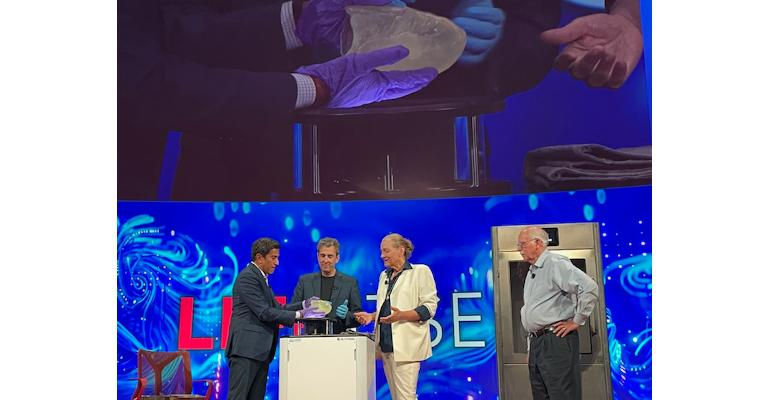
Martine Rothblatt, Chairperson and CEO of United Therapeutics, showed off her company's 3D-printed lung technology. United Therapeutics' latest 3D lung scaffold consists of a record-breaking 44 trillion voxels (3D pixels), which lay out 200 million alveoli and 2,500 miles of capillaries. The company will next populate this scaffold with tissue derived from patient stem cells to create viable organs for transplantation. Incredibly, the first human trials are expected within the next five years.
Here is the video and the associated press release.
3D-Printed Hearts
Dr. Doris Taylor

Source: CNN.
Dr. Doris Taylor, who directed regenerative medicine research at Texas Heart Institute in Houston until 2020, is tackling how to bioprint hearts for human transplantation. Her company Organamet Bio has developed a technique whereby donor hearts from pigs are stripped of their porcine cells and infused with human cells. The company's scientists build a vasculature to deliver blood flow, inject stem cells into the porcine scaffold, and gently stimulate these cells electrically and mechanically to get the heart to develop properly. Organamet Bio has been able to build beating human hearts comprised of up to 400 billion cells.
The company is currently working on ways to scale up the production of reliable, implantable hearts. Their target time frame for the first human trial? Also five years.
Palate Cleanser: Cultivated Chicken
Kimbal and Christiana Musk

Source: CNN.
Kimbal Musk (Elon's brother) and his wife Christiana are passionate about sustainable food. They have co-founded or invested in a number of ventures that seek to make food production more sustainable, reduce food waste, and yes, grow food on Mars.
In this presentation, Kimbal and Christiana talk with Upside Foods Co-Founder and CEO Uma Valeti about his company's cultivated chicken breasts. Upside Foods grows large cultures of real chicken cells in a commercial facility, using a small cell sample from a live chicken as the starting point. No animal slaughter required. Upside Foods has even developed techniques to recreate the texture and consistency of traditional chicken breasts.
Kimbal, a classically trained chef, goes on to cook and serve Upside Foods chicken breasts to his guests on stage. You can watch Dr. Sanjay Gupta and others eat cell-grown meat for the first time in their lives.


Comments